
Paver patios
Concrete, travertine and natural stone pavers in a range of patterns and colors.

Hardscaping gives a yard its structure — the patios, paths and walls that make outdoor spaces usable, low-maintenance and beautiful alongside water-wise planting.
Planning a project like this? Share a few details for a free estimate.
Request a Free EstimateHardscaping provides the paths, patios and walls that make a yard usable. Combined with drought-tolerant planting or artificial grass, it can reduce outdoor water use.
A paver patio is also the usual foundation for an outdoor kitchen or a pergola.
Concrete, travertine and natural stone pavers in a range of patterns and colors.
Front paths and side yards that improve access and curb appeal.
Paver and concrete driveways designed for durability and drainage.
Seat walls, planters, steps and borders that define outdoor rooms.
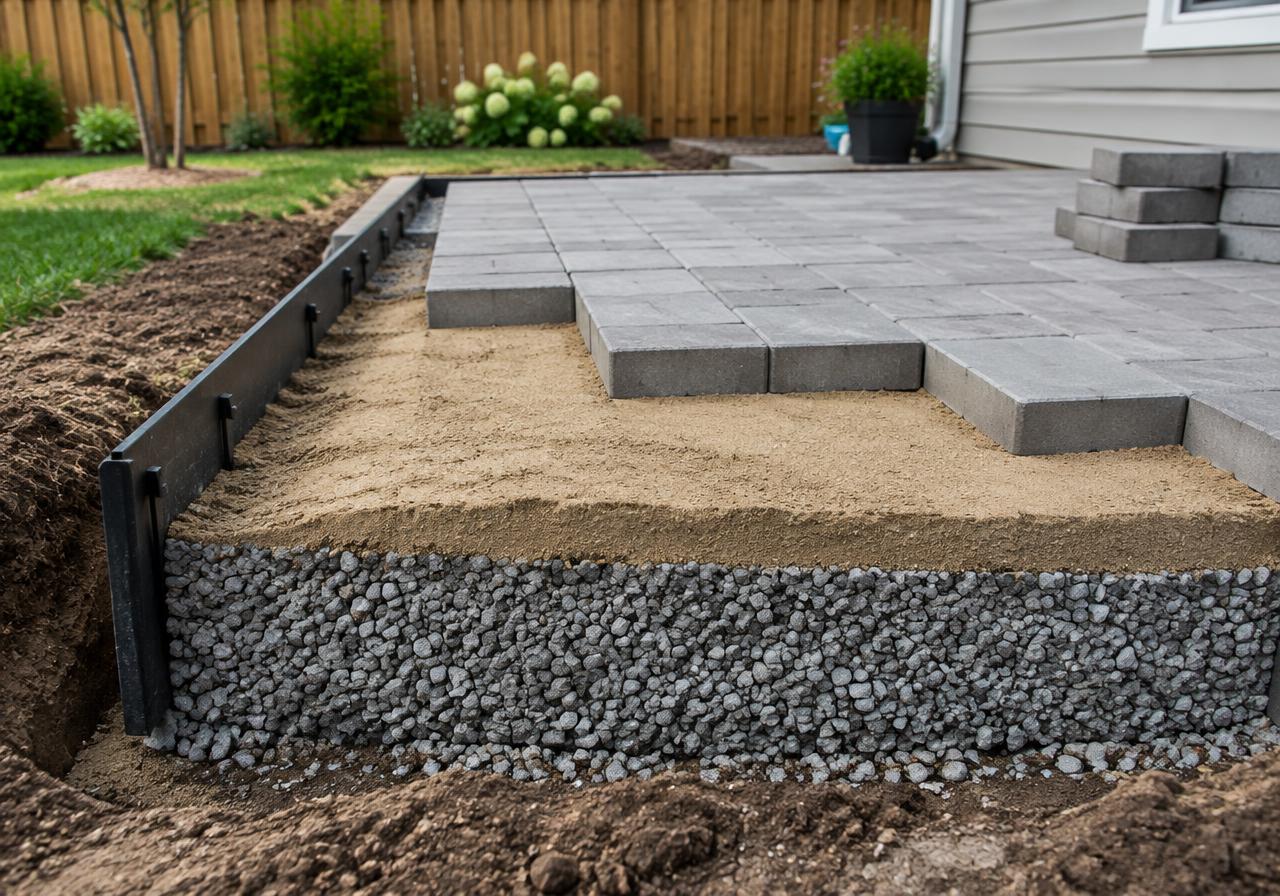
What's under the pavers decides how long they stay flat. Most failures — sinking, shifting, weeds — trace back to the base.
Hardscape changes how water moves across your yard, so slope and drainage are designed before anything is laid.
The surface sets the look and sets expectations for maintenance.
AAA All America Affordable Construction and Remodeling Inc. manages the agreed construction process, including applicable permit coordination, inspections, project management, subcontractor coordination, quality oversight, warranties and project completion. BH Signature personally reviews homeowner inquiries and introduces relevant project details to the identified licensed contracting partner, which handles construction planning and delivery.
Assess soil, existing drainage, slopes, utilities and how the space will be used.
Plan patios, paths, walls and drainage, and choose surfaces.
Excavate, install drainage and compact the base in layers.
Set bedding, lay pavers or stone, cut edges and install restraints.
Fill and compact joints, clean the surface and review care instructions.
Responsibilities depend on the agreed project scope and contract. Permit approval rests with the relevant authorities; warranty coverage and terms are confirmed for your project. Completion timing depends on the work, site conditions and required approvals, not a promised date.
| Surface | Drainage | Repairs | Maintenance |
|---|---|---|---|
| Concrete pavers | Surface drainage via slope | Replace individual units | Joint sand top-up, occasional sealing |
| Permeable pavers | Water passes through joints | Replace individual units | Clear joints of debris periodically |
| Natural stone | Depends on installation | Replace individual stones | Sealing for some stones |
| Poured concrete | Surface drainage via slope | Cracks are harder to hide | Periodic sealing for decorative finishes |
Usually because of insufficient excavation, poor compaction or missing edge restraints. A properly built base is the most important part of the job.
They reduce runoff and puddling and can help where drainage is limited. They need an open-graded base and occasional joint cleaning.
Pavers can be repaired unit by unit and handle minor ground movement well. Poured concrete has a seamless look but cracks are harder to repair invisibly.
Sweep regularly, top up joint sand when needed, address weeds early and reseal if your chosen surface calls for it.
Considering this home improvement? Tell BH Signature what you have in mind. The licensed contractor can then discuss your property, project scope, consultation, and estimate directly with you.
Request Your Free EstimateFree estimates are provided by the licensed contractor, AAA All America Affordable Construction and Remodeling Inc..